
Keep an organized record of every journey with our free printable Vehicle Mileage Logs. Choose from several clear designs in A4 or US Letter format, download the PDF that suits you, and print as many copies as you need for your personal vehicle, business car, or shared household vehicle.
How to Use a Vehicle Mileage Log
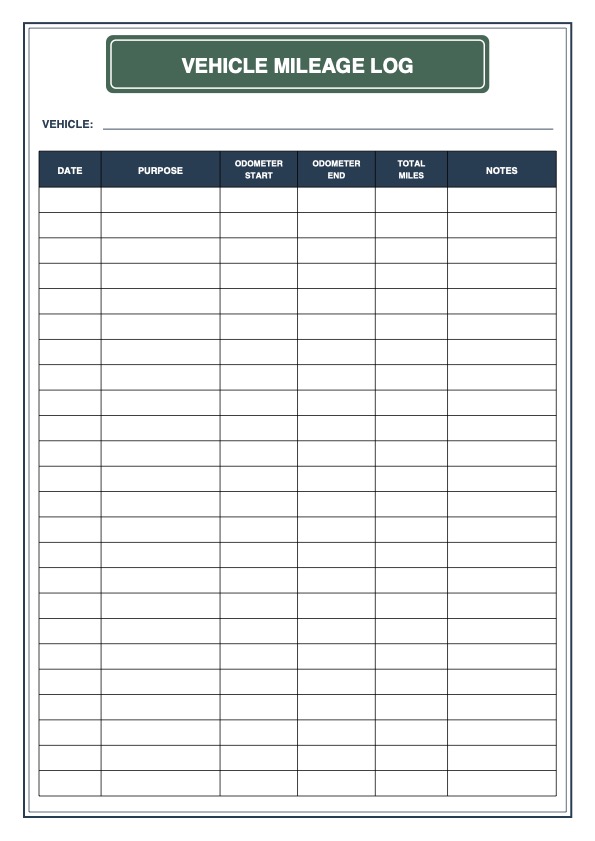
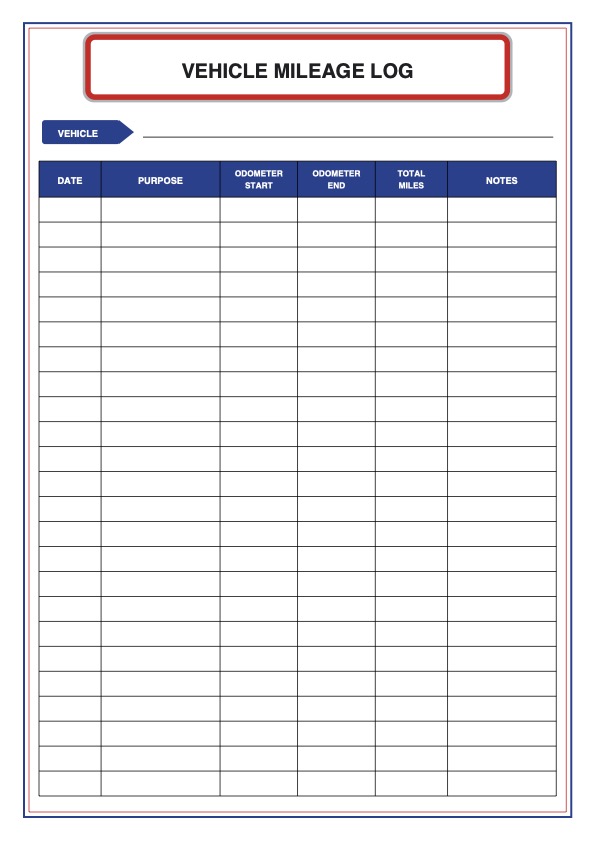
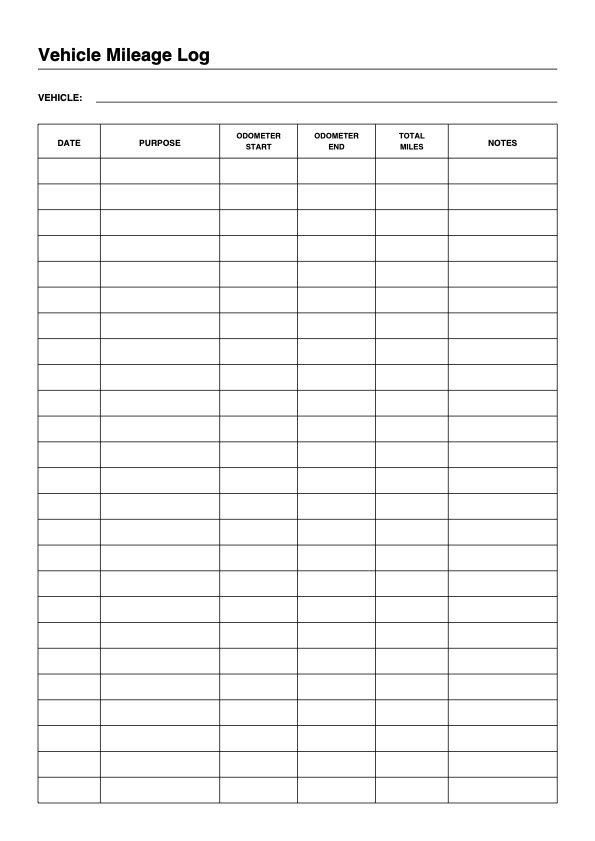
Start by writing the vehicle’s name, registration number, or another identifying detail in the Vehicle field. This is especially useful if you manage records for more than one car, van, motorcycle, or other vehicle.
For each journey, enter the date and briefly describe its purpose. Next, record the odometer reading at the beginning and end of the trip. Subtract the starting reading from the ending reading and enter the result under Total Miles. The notes column can be used for additional information, such as the destination, client name, route, parking costs, or unusual circumstances.
For the most reliable records, complete the log immediately before and after each journey. This reduces the risk of forgetting a trip or estimating the mileage later.
Useful for Personal and Business Mileage
A printable mileage log can be used in several different ways. Business owners, employees, freelancers, and self-employed professionals can use it to separate work-related journeys from personal travel. It can also help provide supporting information when preparing expense reports or reviewing vehicle use.
For personal vehicles, the log can help you understand how frequently the vehicle is used and how far it travels over time. Families sharing a car may use the notes section to record who drove it or why it was used. A mileage log may also be helpful for leased vehicles with annual mileage limits.
Benefits of Keeping a Mileage Record
Recording mileage creates a clear history of how a vehicle has been used. Instead of relying on memory or searching through calendars and receipts, you have the relevant details together in one place.
Regular tracking can also make it easier to estimate fuel consumption, compare monthly driving patterns, and plan for future vehicle expenses. Odometer records may help you anticipate maintenance tasks that are based on mileage, such as oil changes, inspections, and tire rotations.
A paper log is particularly convenient because it does not require an account, subscription, battery, or mobile connection. It can be stored in the glove compartment and completed whenever the vehicle is used.
Tips for Accurate Mileage Tracking
Choose one consistent method and use it for every journey. Record either miles or kilometres throughout the entire sheet rather than switching between the two. Although the template uses the heading Total Miles, it can also be used for kilometres if everyone using the log follows the same system.
Check that the ending odometer reading for one journey makes sense compared with the starting reading of the next. Reviewing the sheet regularly can help you notice missing entries or simple calculation errors.
If you use the vehicle for business purposes, write a specific purpose instead of a vague description. “Client meeting in Manchester,” for example, is more informative than simply writing “work.” Requirements for reimbursements and tax records vary, so check the applicable rules in your country or region.
Finally, keep completed sheets together in a folder, binder, or scanned digital archive. Adding the month or recording period to each sheet will make older journeys much easier to find.