
Keep your spending organized with ToolRuler’s free printable expense trackers. Explore the layouts below, choose one that suits your routine, and download a PDF to print. Whether you want a simple spending log or space for extra details, these templates give you a convenient place to record purchases and review your expenses.
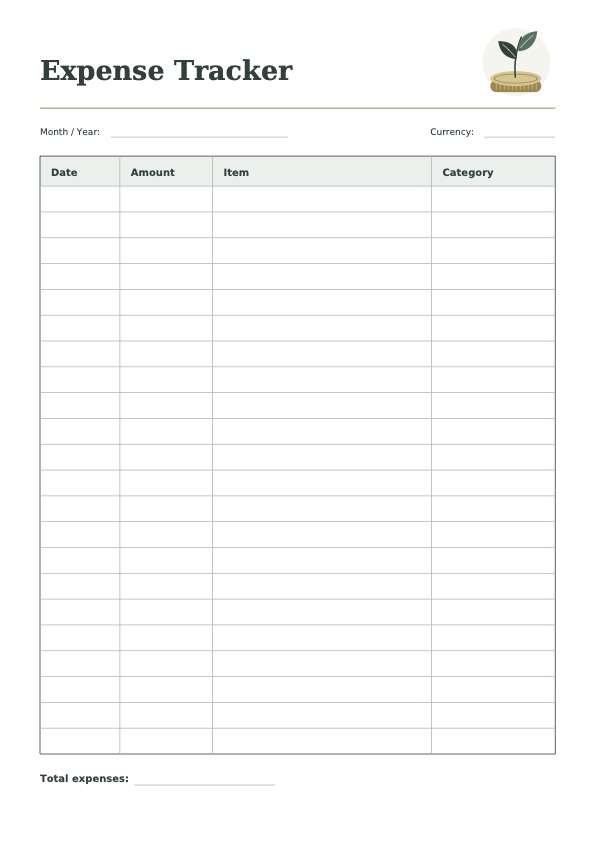
Simple printable expense tracker
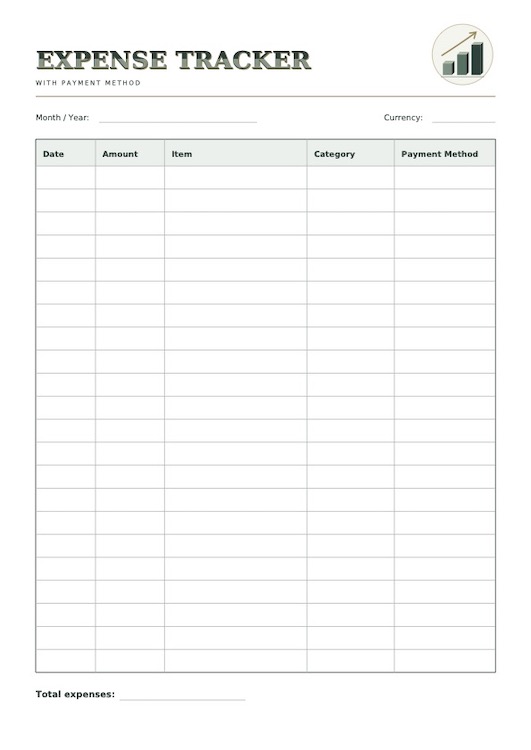
Printable expense trackers (with payment method column)
What Can You Track?
An expense tracker works well for everyday household spending, including groceries, transport, subscriptions, meals out, and personal purchases. Keeping these expenses together makes it easier to see where your money goes throughout the month.
You can also use a separate sheet for a specific purpose. Track spending during a vacation, organize the costs of a home improvement project, or record purchases for an event. Giving each project its own page helps you review its total without sorting through unrelated transactions.
For shared household expenses, agree on what to record and who will update the sheet. This helps prevent missing entries or counting the same purchase twice.
Why Track Expenses on Paper?
A printable tracker gives you a spending record without requiring an app, account, or connected bank feed. You can keep it in a planner, store it with your receipts, or place it somewhere convenient for regular updates.
Writing down purchases also creates an opportunity to pause and notice them. Small, frequent expenses can be easy to overlook individually, but a completed page makes those patterns more visible.
The record becomes particularly useful when you review it. Your totals can help you set a future budget based on actual spending, identify subscriptions to reconsider, or plan for costs that occur less frequently.
Tips for Keeping an Accurate Spending Record
Choose a regular time to update your tracker. A brief daily check or a consistent weekly session is usually easier to maintain than reconstructing an entire month from memory. Keep receipts together until you have entered them.
Use consistent categories, such as Food, Transport, Home, and Entertainment. Start with a short list and add categories only when the distinction would be useful.
Avoid double counting. If you record individual credit card purchases, do not record the payment of that card balance as another expense. Similarly, a cash withdrawal is not an additional purchase if you are already tracking what you buy with that cash.
Review Your Spending Regularly
At the end of your chosen period, add up the entries and check them against receipts or transaction records. Compare category totals, note any unusual purchases, and consider one practical adjustment for the next period. Keep completed sheets together so you can compare your spending over time.